
The Essential Guide to Commercial Airline Stretcher Services for Safe Medical Transport
Learn more about commercial airline stretcher and how it applies to your specific needs.
When a patient requires medical transport over long distances, a offers a practical and cost-effective solution. Unlike private air ambulances, commercial flights equipped with stretchers allow patients to travel while lying flat, under the supervision of medical professionals. This service bridges the gap between standard air travel and urgent medical evacuation, providing comfort and safety for individuals with serious health conditions. Whether it’s for repatriation, specialized treatment, or visiting family, understanding how these stretchers work is vital for patients and caregivers alike.
Learn more about airline stretcher Canada and how it applies to your specific needs.
In recent years, the demand for medical escort services has grown significantly, particularly in regions with vast distances like Canada. A service ensures that patients can access healthcare facilities across provinces without the prohibitive costs of dedicated air ambulances. These services are carefully coordinated with airlines to meet safety regulations and medical requirements, making long-distance travel feasible for those who are bedridden or require constant monitoring.
Understanding the Commercial Airline Stretcher Setup
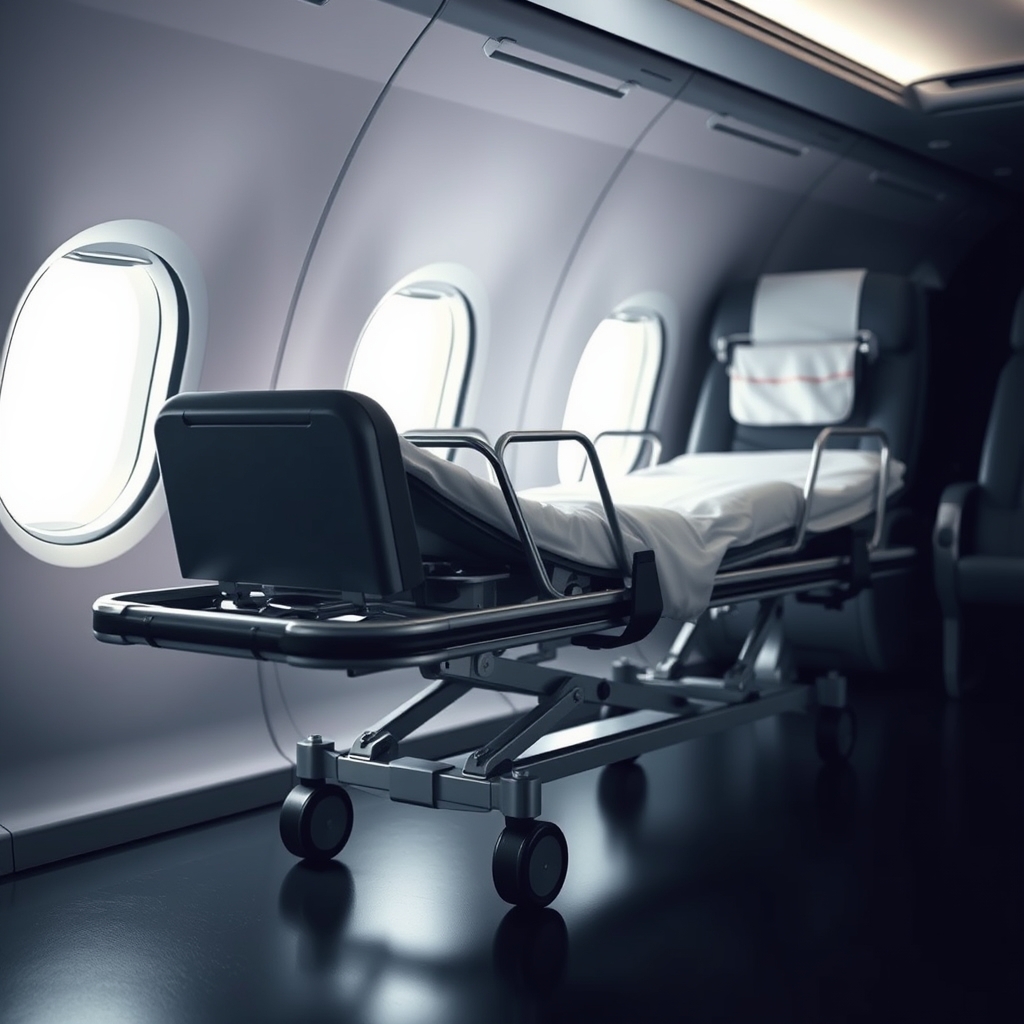
A commercial airline stretcher is essentially a portable bed that is installed in the cabin of a passenger aircraft. It replaces a section of seats, typically in a dedicated area near the front or rear of the plane, to accommodate the patient. The stretcher is secured to the aircraft’s seat tracks and complies with aviation safety standards. Medical equipment such as oxygen tanks, monitors, and IV pumps can be attached, allowing the medical team to provide continuous care during the flight.
For patients in , this setup is particularly beneficial. Alberta’s vast geography and remote communities often require air travel for specialized medical treatment. With a commercial stretcher, patients can be transported from cities like Calgary or Edmonton to major medical centers in other provinces, or even internationally, without the stress of multiple transfers. The process involves close coordination with the airline, airport authorities, and medical staff to ensure a seamless experience.
Benefits Over Traditional Air Ambulance Services
While air ambulances are critical for emergencies, they come with high costs that are often not covered by insurance. A commercial airline stretcher offers a more affordable alternative for non-emergency medical transport. For , this can mean savings of up to 70% compared to private air ambulance services. Additionally, commercial flights have established schedules, making it easier to plan transfers and connect with ground ambulances at the destination.
Another advantage is the availability of medical escorts. These professionals, often nurses or paramedics, accompany the patient throughout the journey. They monitor vital signs, administer medications, and handle any medical emergencies that may arise. For families, this provides peace of mind knowing that their loved one is in capable hands. In contrast, services are typically reserved for critical situations where time is of the essence, but for stable patients, the commercial stretcher option is both practical and comfortable.
How to Arrange a Commercial Airline Stretcher
Arranging a commercial airline stretcher requires early planning and professional assistance. Most airlines have strict policies regarding stretcher installations, and they limit the number of stretchers per flight. Therefore, it is essential to contact a specialized medical transport company that has established relationships with airlines. These companies handle all logistics, including medical clearance, seat reservations, and coordination with airport staff.
The process begins with a medical assessment to determine the patient’s stability for air travel. Once approved, the transport company works with the airline to secure the necessary space. The patient is then transported to the airport via ground ambulance, boarded onto the aircraft with the stretcher, and settled for the flight. Throughout the journey, the medical escort ensures the patient’s comfort and safety. Upon arrival, a ground ambulance meets the flight to transfer the patient to the final destination, such as a hospital or home.
Medical Considerations and Safety Protocols
Learn more about commercial airline stretcher alberta and how it applies to your specific needs.
Safety is paramount when using a commercial airline stretcher. Patients must be medically stable and able to tolerate the cabin environment, including reduced oxygen levels and air pressure changes. The medical escort is trained to manage these conditions and carries emergency equipment. Oxygen can be provided via portable concentrators, and medications are kept accessible. The stretcher itself is designed to minimize movement and prevent injury during turbulence.
Learn more about stretcher patient transport and how it applies to your specific needs.
For patients with specific needs, such as those requiring ventilation or cardiac monitoring, additional equipment can be accommodated. The transport company ensures that all devices are approved for use on aircraft and comply with FAA or EASA regulations. In the case of flights, Transport Canada guidelines are followed, ensuring that the stretcher is securely fastened and that the medical team has clear communication with the flight crew.
Cost Comparison and Insurance Coverage
The cost of a commercial airline stretcher varies depending on the distance, airline, and level of medical support required. Typically, it is much lower than an air ambulance, which can cost tens of thousands of dollars. For a domestic flight in Canada, a stretcher service might range from $5,000 to $15,000, while an air ambulance could exceed $30,000. Many insurance plans, including travel insurance and some health policies, cover stretcher transport if it is deemed medically necessary. It is advisable to check with the insurance provider before booking.
For residents of Alberta, services often have partnerships with local hospitals and insurance companies to streamline the process. Patients should request a detailed quote that includes all fees, such as airport charges, medical escort costs, and ground ambulance transfers. Transparency in pricing helps avoid unexpected expenses and allows families to budget effectively.
Frequently Asked Questions (FAQs)
Is a commercial airline stretcher safe for long-haul flights?
Yes, commercial airline stretchers are designed for long-haul flights and meet rigorous safety standards. The stretcher is securely attached to the aircraft, and the patient is monitored by a medical professional throughout the journey. However, the patient must be stable enough to endure the flight duration, which is assessed before travel.
Can a family member accompany the patient?
In most cases, one family member or companion can travel with the patient, either seated nearby or in the same row. The medical escort also travels with the patient to provide care. Airlines may have specific policies about companions, so it is best to confirm with the transport company.
How far in advance should I book a commercial airline stretcher?
Learn more about air ambulance alberta and how it applies to your specific needs.
It is recommended to book at least two to three weeks in advance, as stretcher spaces are limited. Last-minute bookings may be possible for urgent cases, but availability depends on the airline and route. Early planning ensures smoother coordination.
What medical conditions are suitable for stretcher transport?
Patients with conditions such as spinal injuries, severe fractures, post-surgery recovery, respiratory issues, or cardiac conditions that require lying flat are ideal candidates. A medical assessment is mandatory to confirm suitability. Conditions that are highly contagious or require intensive care may not be suitable.
Readers who are interested in this topic will benefit from exploring multiple perspectives and understanding the nuanced approaches that industry leaders recommend. Taking time to research thoroughly ensures better outcomes and more informed decision-making.
Those looking to gain deeper knowledge in this area should consider following expert analysis, staying updated with the latest developments, and engaging with professional communities where these topics are discussed in detail.
A comprehensive understanding of this subject requires looking at both theoretical foundations and practical applications. By combining study with hands-on experience, learners can develop a well-rounded perspective that serves them well in real-world scenarios.
As the landscape continues to shift and evolve, staying informed about emerging trends and best practices becomes increasingly valuable. This ensures you remain competitive and capable of adapting to new challenges as they arise.
